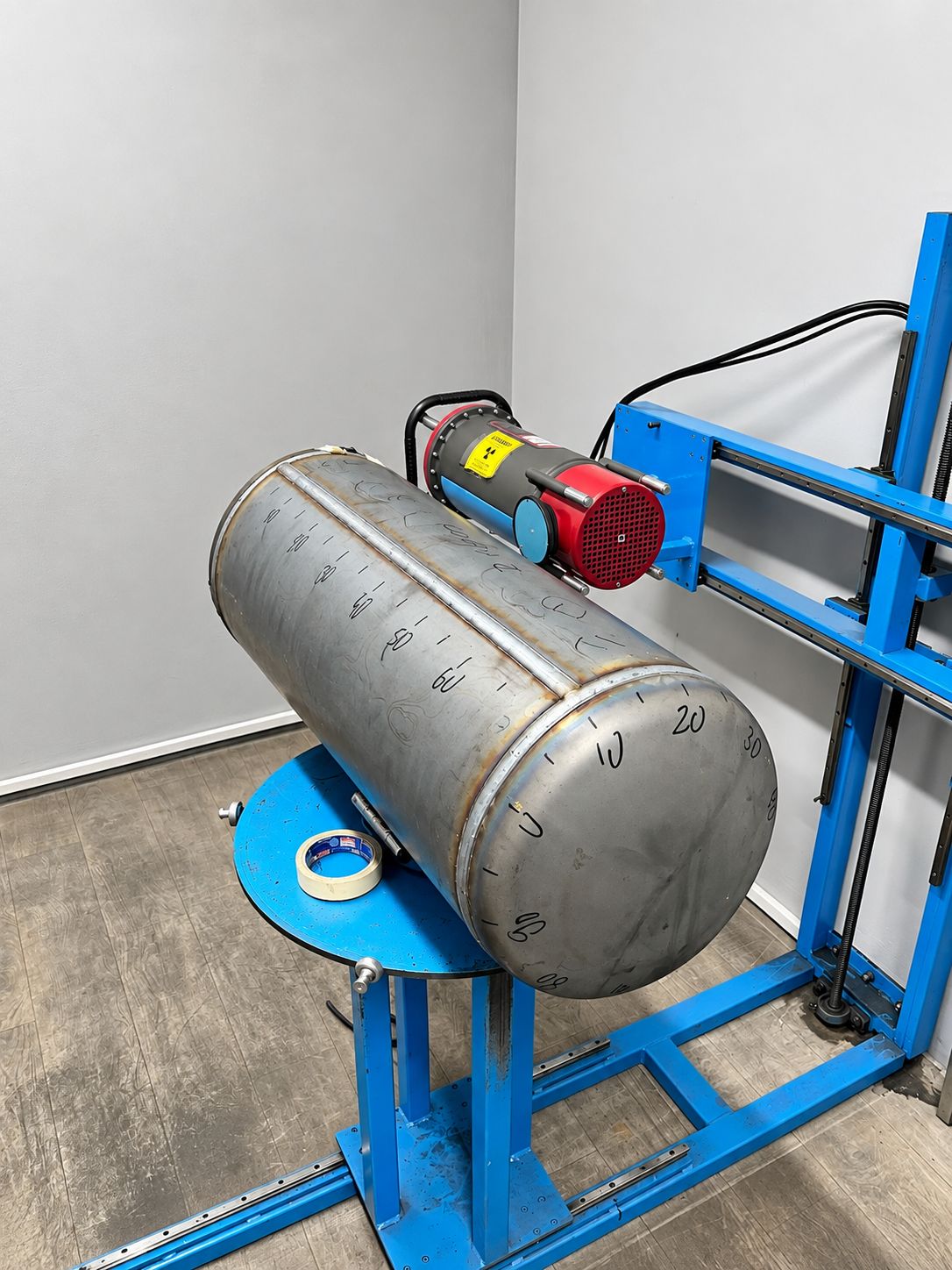


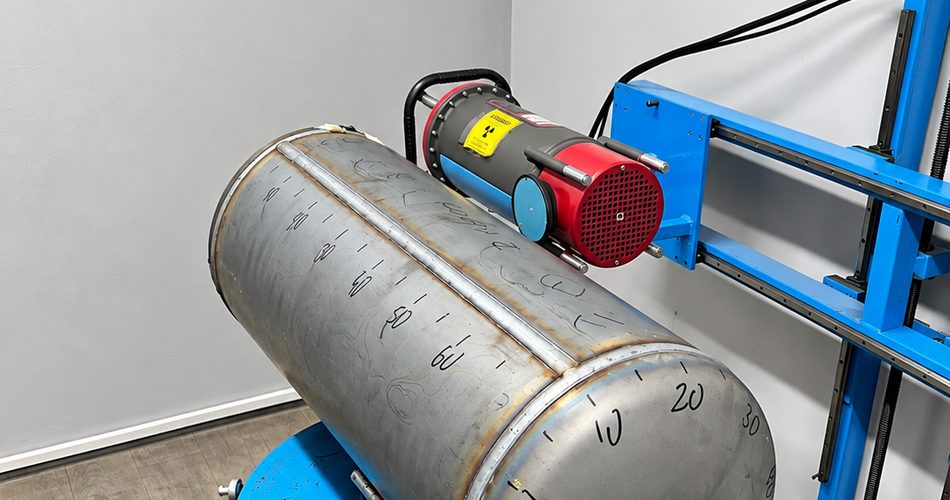
Radiographic testing (RT) is a non-destructive testing method that uses ionising radiation, such as X-rays or gamma rays, to detect defects in the internal structure of a material. It is based on the principle that radiation passing through the material is absorbed to different degrees by regions of different density; cracks, voids, cavities and other internal defects are then imaged on film or on a digital display.
Standards for RT
- ISO 17636: The core standard setting out how industrial radiographic testing is to be performed.
- ASME: Standards covering RT applications, particularly on pressure vessels and piping.
- API 1104: The American Petroleum Institute standard for radiographic testing in applications such as oil and gas pipelines.
How Is RT Performed?
- 01Preparation and cleaning
Dirt, grease and rust that could affect the test results are removed.
- 02Positioning the radiation source
The X-ray or gamma-ray source is placed on one side and the film or digital detector on the opposite side.
- 03Exposure
The radiation passes through the material and is absorbed or scattered according to density differences in its internal structure.
- 04Image acquisition
Defects appear as areas of differing density in the image formed on the film or detector.
- 05Image interpretation
The image is examined to identify defects such as cracks and voids.
- 06Reporting
The location, size and type of the defects are documented in a test report.
Fields of Application
- Oil and gas industry: Detection of internal defects in pipelines, storage tanks and infrastructure.
- Aerospace industry: Detection of flaws in the internal structure of critical components.
- Automotive industry: Checking engines and metal parts for internal flaws.
- Energy sector: Testing of critical materials in high-risk energy infrastructure.
- Machinery manufacturing: Detection of defects, particularly weld imperfections, in equipment requiring high strength.
- Construction and infrastructure: Detection of internal cracks and defects in concrete and metal structures.
RT Equipment and Techniques
- Radiation source: X-ray tubes or gamma-ray sources (e.g. cobalt-60, caesium-137) are used.
- Film or digital detector: Records the radiation transmitted through the material and reveals defects.
- Protective equipment: Protective clothing, shielding and radiation protection devices are used to guard against the harmful effects of radiation.
- Radiographic test equipment: Devices that allow images to be analysed using digital displays or film.
- Software and analysis tools: Used in digital systems to analyse results and identify defects.
Advantages
- Detects cracks and voids even deep within the material.
- Film or digital images provide a permanent record.
- Accurately determines the size and type of defects.
- Non-destructive: the material is not damaged.
- Applicable across a wide range of industries and materials.
Points to Consider
- Higher cost than other methods, owing to X-ray tubes, gamma sources and detectors.
- Requires special protective measures to ensure radiation safety.