

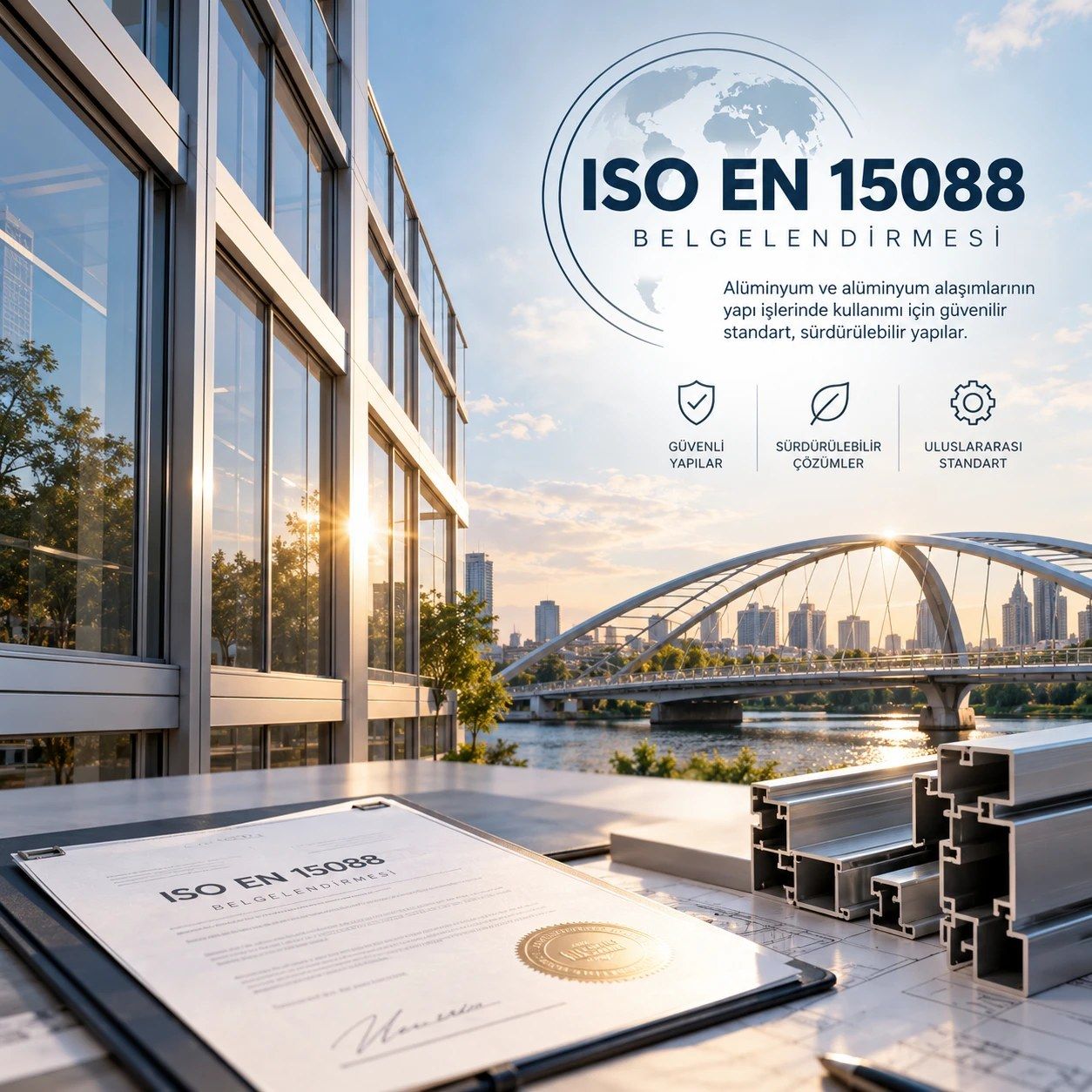
EN 15088 is the European standard that specifies the technical delivery conditions for structural products made of aluminium and aluminium alloys. It defines the requirements for production processes, material properties, mechanical performance and quality control.
The standard is applied to ensure the safe use of aluminium structural components and to harmonise conformity criteria in international projects.
How Is EN 15088 Conformity Assessment Carried Out?
Conformity assessment activities are aimed at verifying whether products meet the requirements of the relevant standard:
- 01Application
Receipt of the application and definition of the scope
- 02Document review
Review of the technical documentation
- 03Production processes
Assessment of the production processes
- 04Material certificates
Checking of material certificates
- 05Mechanical tests
Review of mechanical test results
- 06Dimensional and surface checks
Evaluation of dimensional and surface quality checks
- 07Certification
Completion of certification once the conformity requirements have been met
After certification, periodic surveillance is carried out to ensure that product conformity is maintained.
Why Apply EN 15088?
EN 15088 is applied to ensure that aluminium structural products are used safely and in a controlled manner:
- Improving structural safety
- Verifying product performance
- Standardising production quality
- Ensuring compliance with international standards
- Strengthening traceability and quality control processes
- Increasing acceptance in global markets
Fields of Application for EN 15088
Aluminium structural products are used in a wide range of engineering and construction fields:
EN 15088 Equipment and Techniques
During conformity assessment, the compliance of products with the technical requirements is verified using a range of testing and inspection methods:
- Mechanical testing equipment
- Chemical analysis methods
- Dimensional measuring instruments
- Non-destructive testing methods (UT, PT, MT)
- Surface quality inspection equipment
- Material certificates and traceability records
- Calibrated measuring instruments
- Laboratory test reports
Advantages of EN 15088
- Offers lightweight, high-strength structural solutions.
- Builds confidence through independent conformity assessment.
- Supports compliance with international standards.
- Helps verify structural performance.
- Provides durable, corrosion-resistant solutions.
- Delivers a competitive advantage in global markets.
Points to Consider (maintaining compliance requires regular quality control and monitoring)
- Need for regular audits and inspections
- Continuity of technical records
- Consistent operation of quality processes
- Ongoing obligation to comply with the requirements of the standard