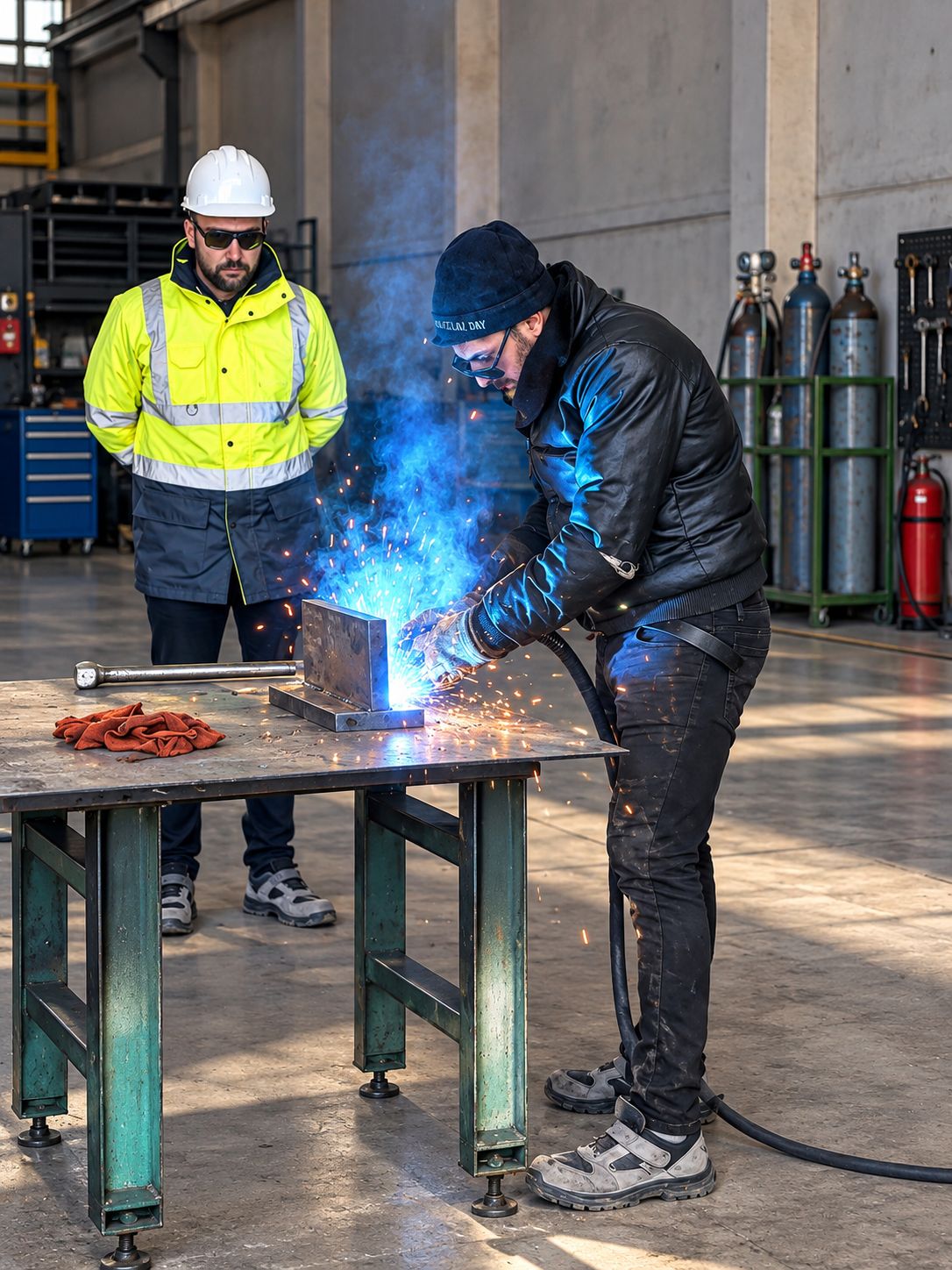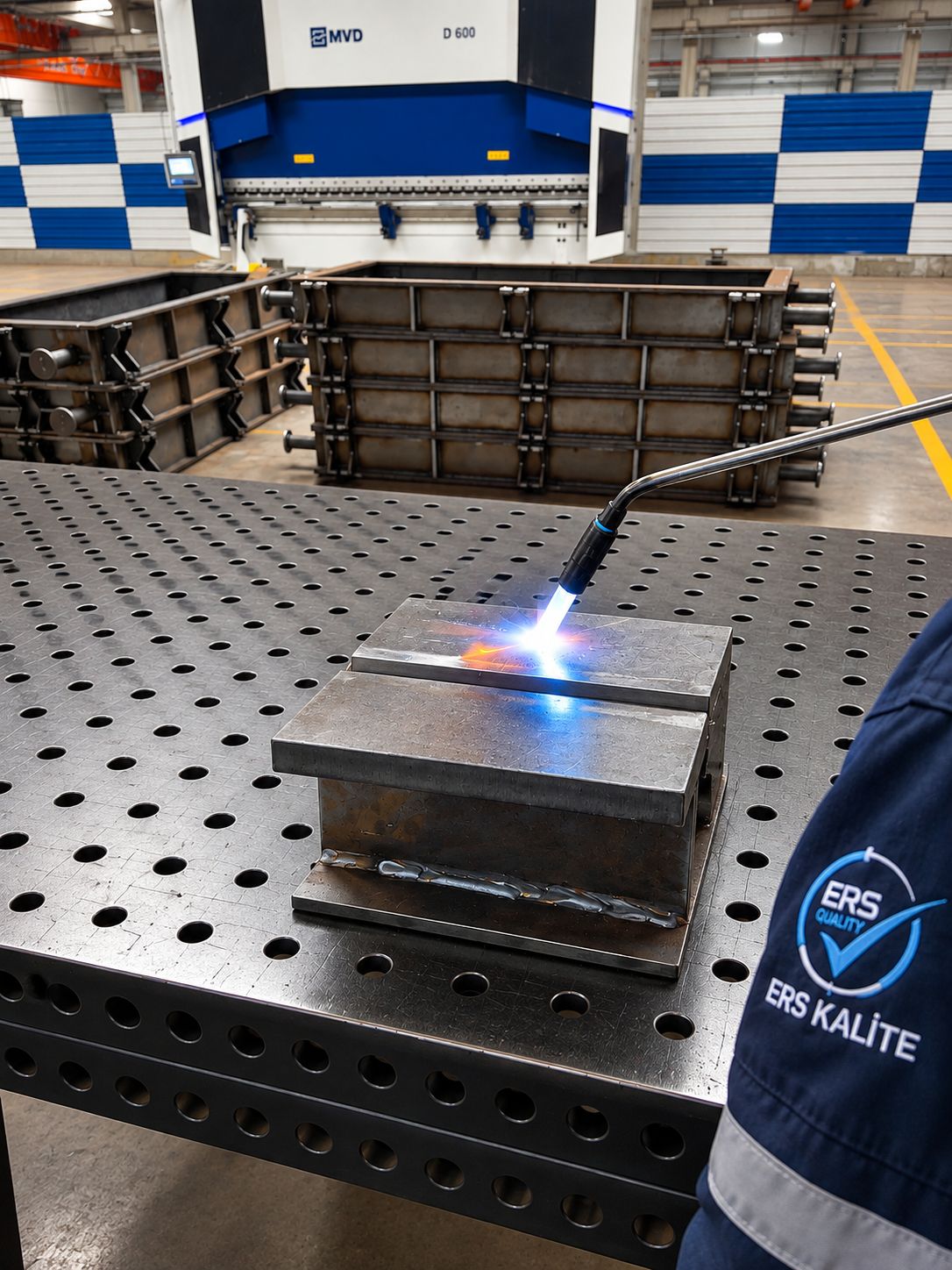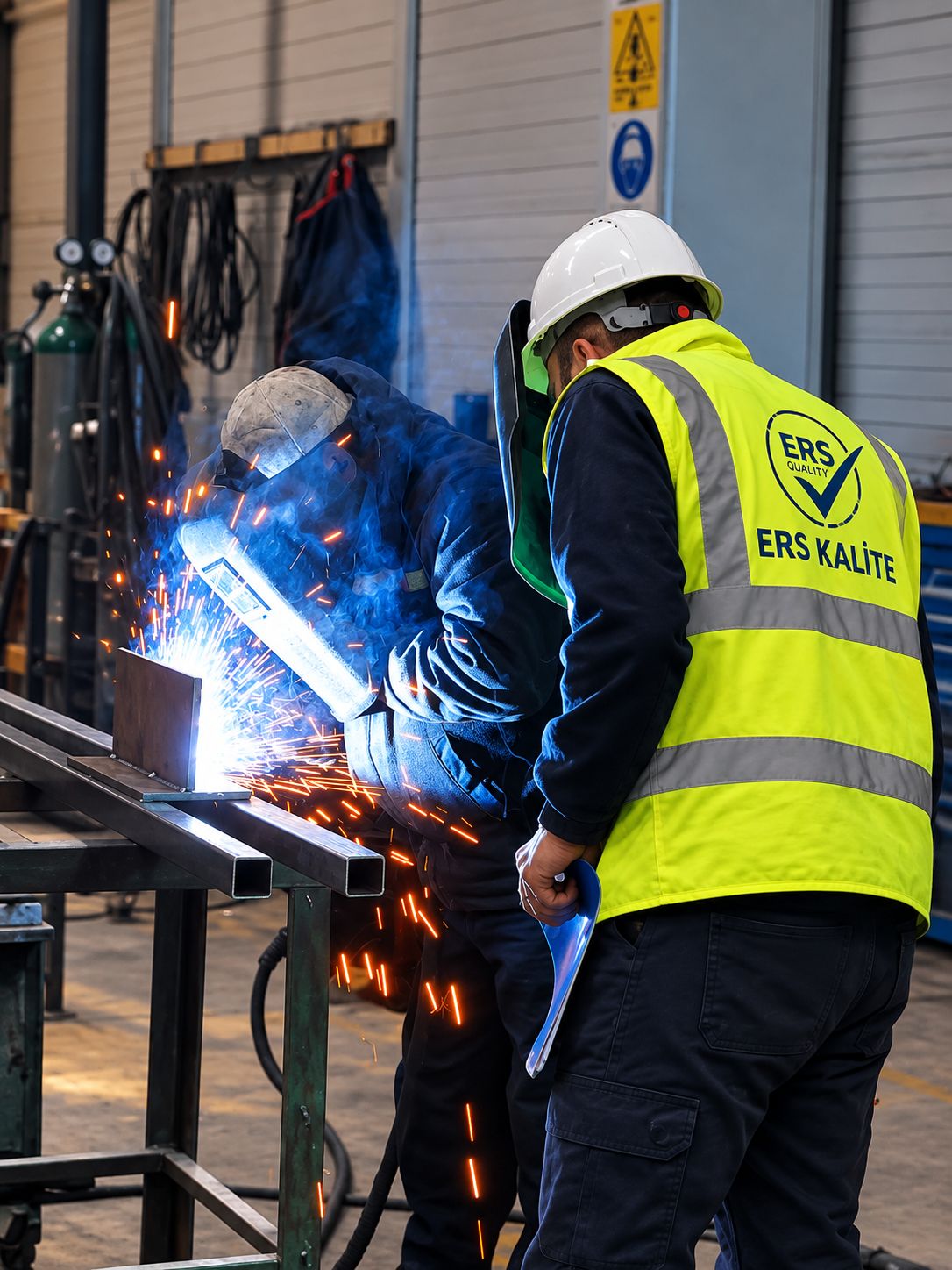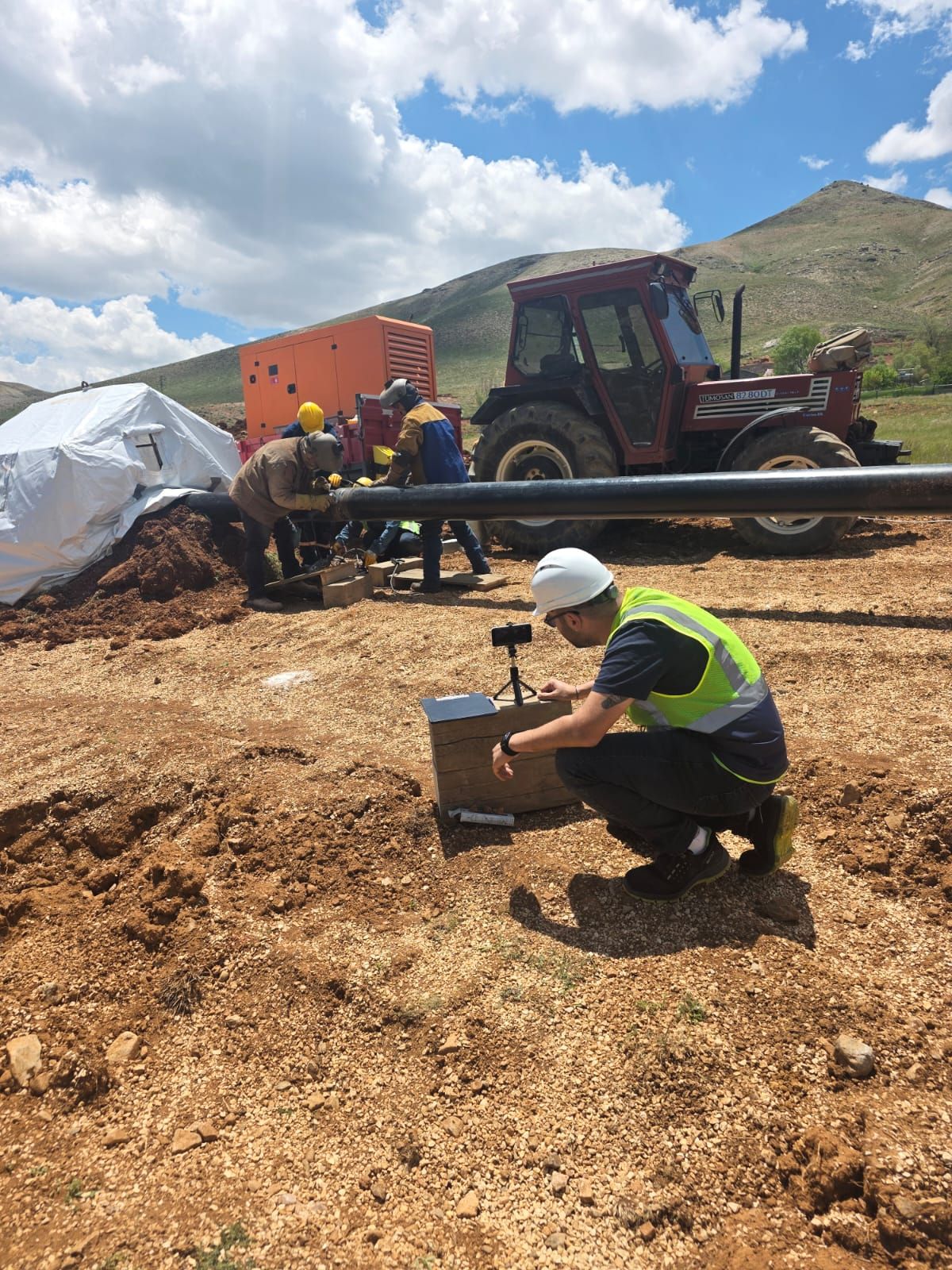

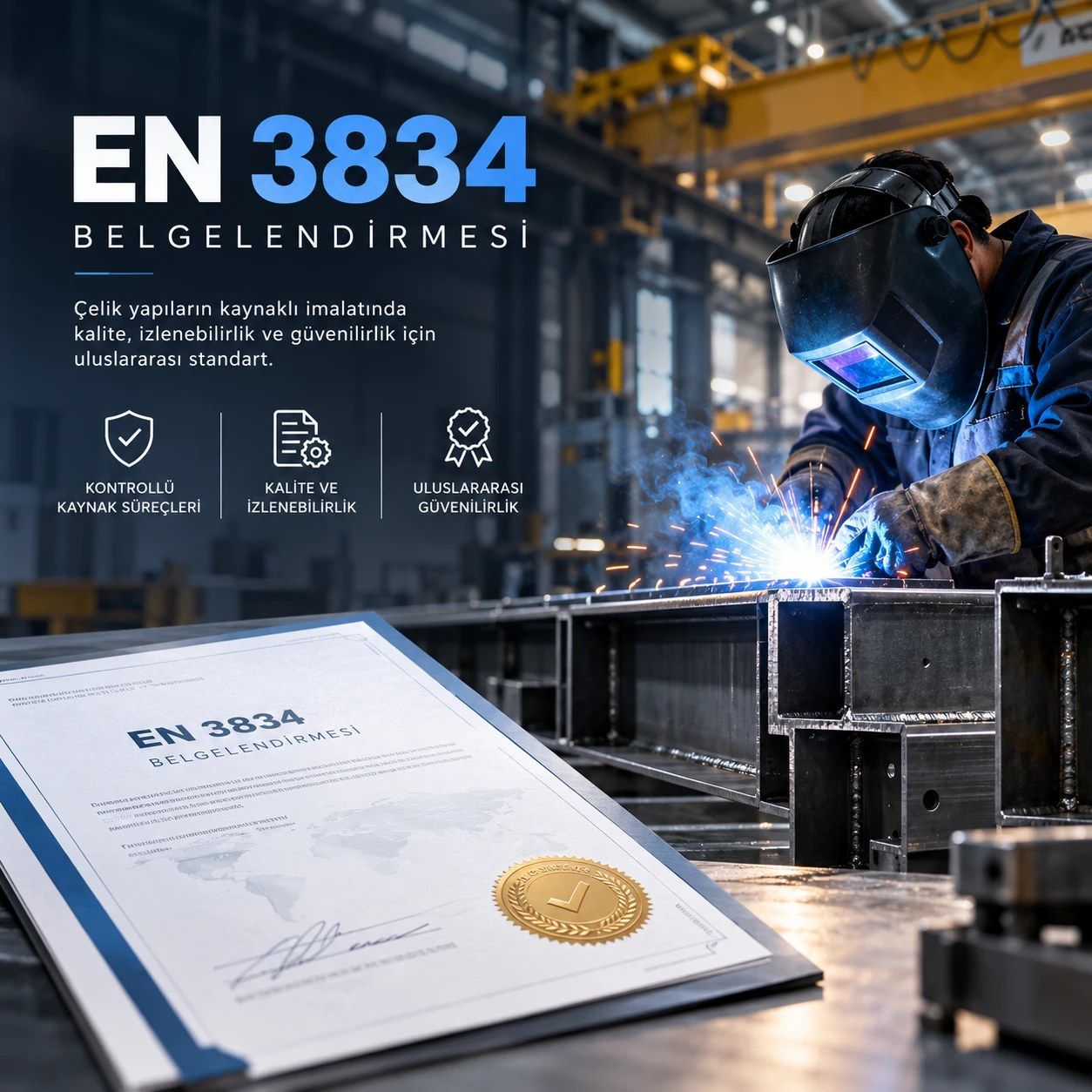
Today, many manufacturing facilities rely on some form of welded fabrication. The welding process, the filler wire used, ambient conditions and similar factors all determine the quality of the product, which in turn directly affects the quality and success of your company.
TS EN ISO 3834, the quality standard for welded fabrication, helps establish whether the welding carried out by a manufacturer meets the required quality. TS EN ISO 3834 is a series of five parts and defines all the quality requirements needed to operate, monitor and manage the fabrication process. Manufacturers holding EN ISO 3834 certification can use it to demonstrate the quality of their welded fabrication to their clients.
At ERS KALİTE, our experienced, disciplined and authorised specialists, with many years in welded fabrication, provide TS EN ISO 3834 certification to establish the production quality of companies engaged in welding fabrication.
The Parts of TS EN ISO 3834
- EN ISO 3834-1: Criteria for the selection of the appropriate level of quality requirements
- EN ISO 3834-2: Comprehensive quality requirements
- EN ISO 3834-3: Standard quality requirements
- EN ISO 3834-4: Elementary quality requirements
- EN ISO 3834-5: Documents required to claim conformity with the quality requirements
Documents Required for Application
- Certificate of Activity (Chamber of Commerce)
- Authorised Signatory List
- Tax Registration Certificate
- Trade Registry Gazette
Prerequisites for Certification
- WPQ – Welder qualification
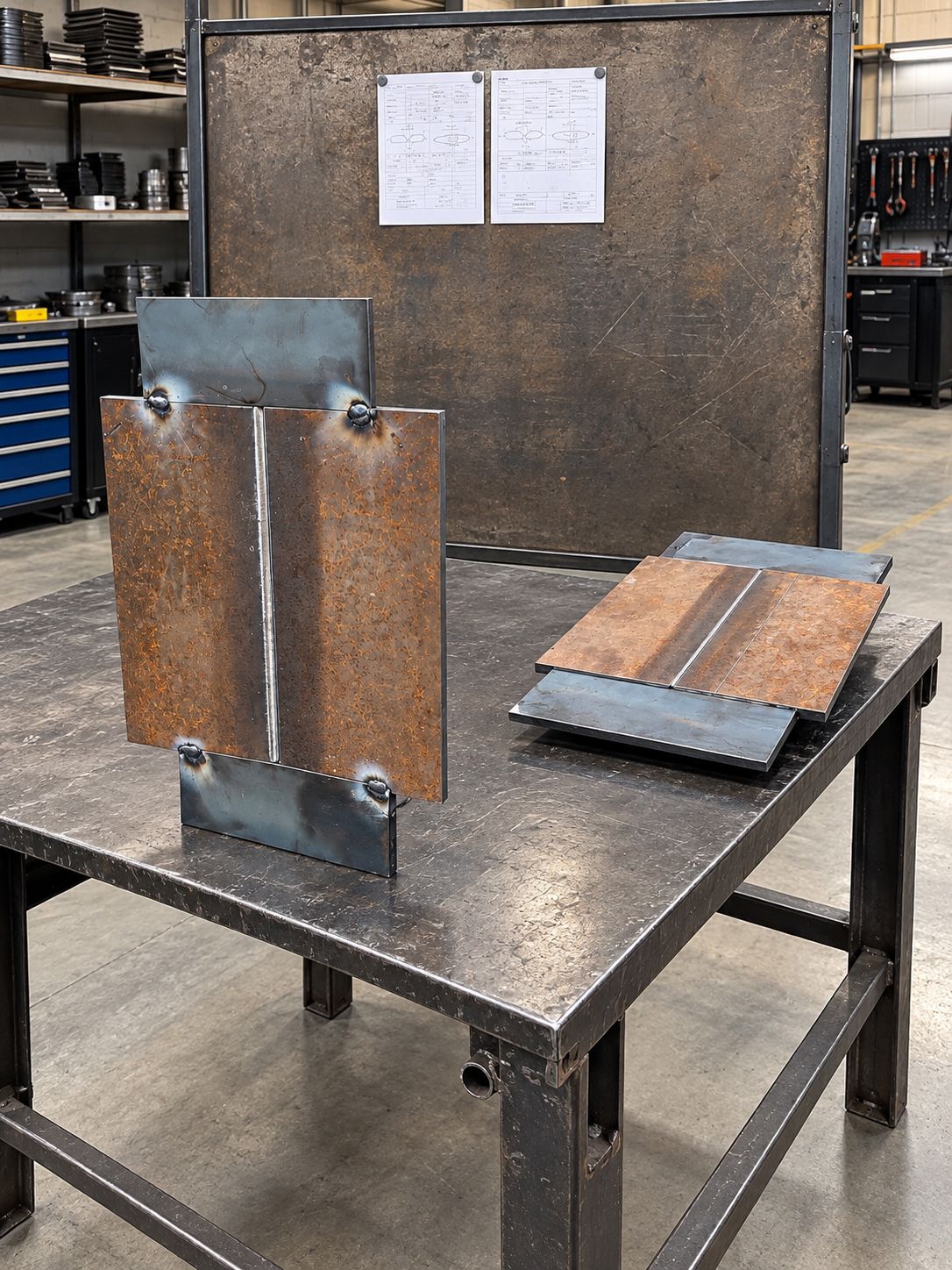
- PQR – Welding procedure qualification
- WPS – Preparation of welding procedure specifications
TS EN ISO 3834 certificates are issued with a maximum validity of three years. During this period, surveillance audits are carried out at least once a year to verify continued compliance with the requirements of the standard.
Conformity Assessment of Quality Requirements for Fusion Welding of Metallic Materials
EN ISO 3834 is an international standard that defines the quality requirements for fusion welding of metallic materials. Its aim is to enable companies engaged in welded fabrication to control the quality level of their production processes within a systematic framework and to sustain it over time.
The EN ISO 3834 conformity assessment process comprises systematic review and verification activities that establish whether welding production meets the specified quality requirements.
What Is the EN ISO 3834 Standard?
EN ISO 3834 defines how a quality management system for welded fabrication should be established and maintained. Rather than being a product standard, it focuses on the production process. The following areas are assessed:
- Welding coordination
- Personnel qualifications
- Control of welding procedures
- Production planning and traceability
- Inspection and testing activities
- Documentation and records management
EN ISO 3834 is widely applied, particularly in the steel construction, pressure equipment and industrial manufacturing sectors.
How Is the Conformity Assessment Carried Out?
The EN ISO 3834 conformity assessment involves a systematic review of whether welding fabrication processes meet the quality requirements. The process generally consists of the following stages:
- 01Quality management system
Review of the welding quality management system
- 02WPS review
Evaluation of the welding procedure specifications (WPS)
- 03Welder qualifications
Checking of welder qualification certificates
- 04Material conformity
Review of the conformity of parent materials and welding consumables
- 05Production processes
Assessment of the production processes
- 06Inspection and test records
Checking of inspection and test records
- 07Traceability
Verification of the traceability system
The assessment determines whether the welding fabrication processes conform to the requirements of EN ISO 3834.
Why Apply EN ISO 3834?
EN ISO 3834 is applied to increase confidence in the quality of welded fabrication and to keep production processes under control. The reasons for applying it include:
- Improving the quality of welded fabrication
- Standardising production processes
- Reducing errors and defects
- Strengthening the traceability system
- Verifying the competence of personnel and equipment
- Meeting internationally recognised quality requirements
Fields of Application
EN ISO 3834 is applied in many industries involving welded fabrication. The main fields of application are:
Equipment and Techniques Used Under EN ISO 3834
In the EN ISO 3834 conformity assessment, the production process and the quality system are assessed as well as the product itself. The methods used include:
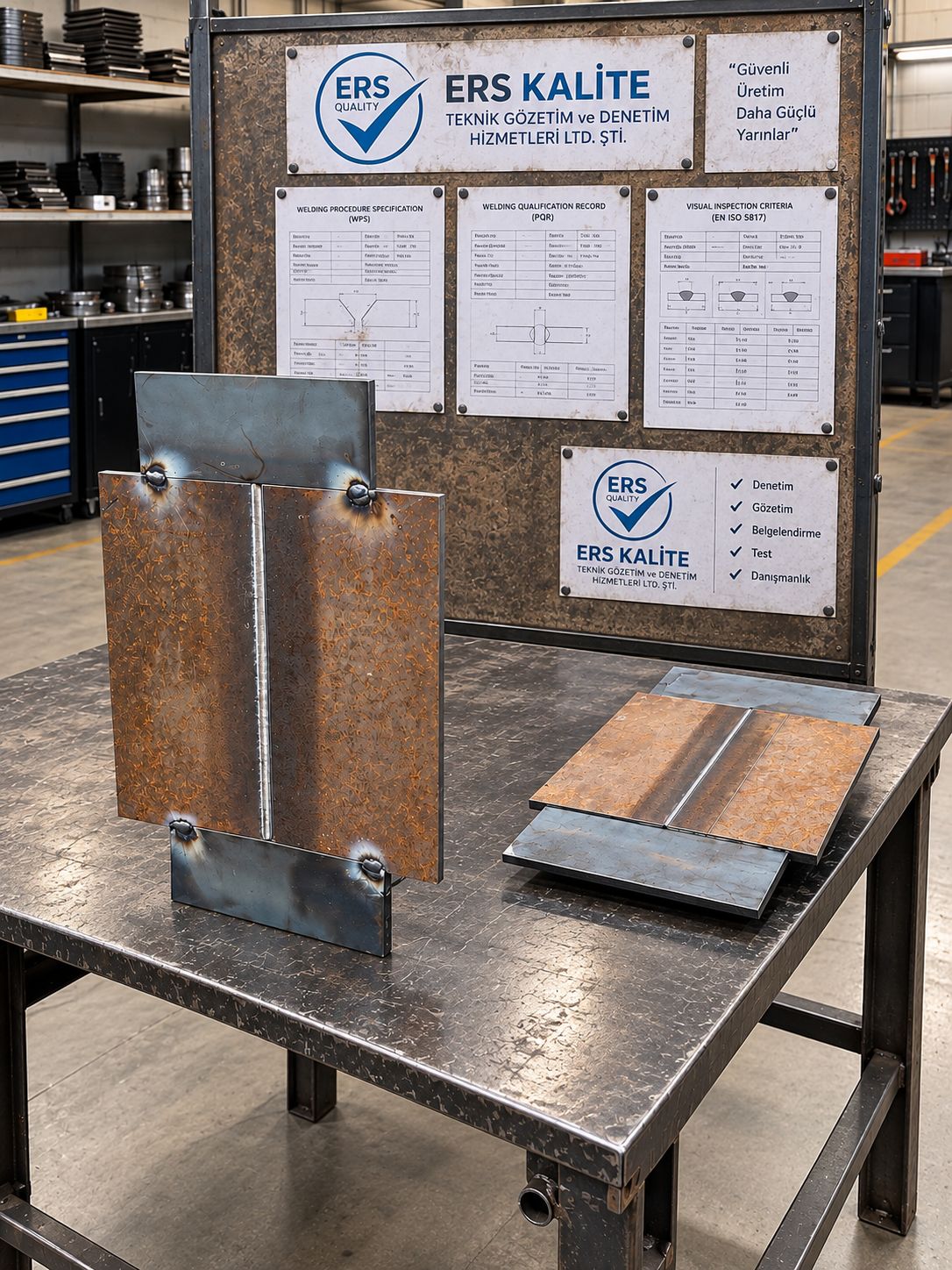
- Welding procedure qualification records (WPS/PQR)
- Welder certification checks
- Non-destructive testing (NDT) methods
- Mechanical testing equipment
- Spectrometers and chemical analysis equipment
- Visual inspection techniques
- Quality management system audits
Together, these methods verify the quality of welded fabrication.
Advantages of EN ISO 3834
- Ensures consistent quality in welded fabrication.
- Reduces production errors.
- Strengthens the traceability system.
- Supports compliance with international standards.
- Verifies the competence of personnel and processes.
- Supports CE marking and similar conformity procedures.
Points to Consider
- Requires comprehensive documentation.
- May increase the process control workload.
- May make personnel training and certification mandatory.
- Audits and records management may take additional time.
Nevertheless, EN ISO 3834 is one of the cornerstones of quality assurance in welded fabrication.